Getting Out The Votes (Dollars) For Your Brand
 How Marketers Can Learn From Politics
Marketers can learn a lot from their political campaign colleagues i.e. knowing one's constituencies, packaging the candidate, getting out the vote, and employing effective media to name a few.
The political campaign objective? Get your candidate more votes than the others on the ballot. The marketing campaign objective? Get more dollars than the others in the register.
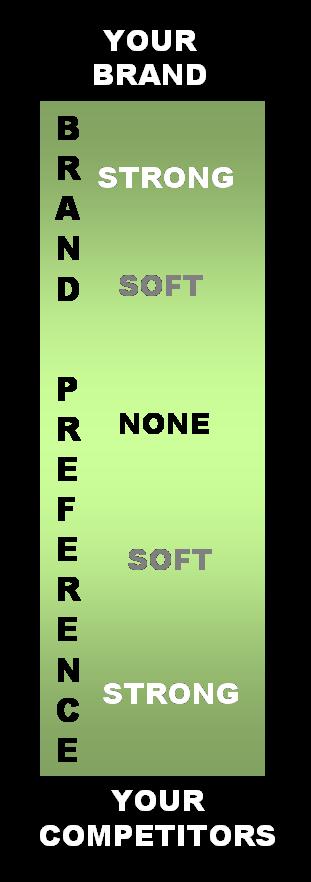
Smart political campaign managers know the landscape. They know that the voters can be looked at as a spectrum from "strongly for" to "softly for" to "undecideds" to "softy against" to "strongly against". Where, therefore, should they wisely invest their limited resources? Logically it would be to convert the "softly for" to the "strongly for" and the "undecideds" to the "softly for". Next, albeit, a tougher task, to convert the "softly against" to "undecideds" and then have a shot at luring them to the "softly for". This is based on the premise that it is highly improbable to poach votes from another candidate's "strongly for" base.
The same can be said in today's consumer democracy where consumers vote with their dollars. When developing a marketing plan with limited resources, it is important to first define and understand the brand preference spectrum. One is more likely to have a better R.O.M.I. (return on marketing investment) with those consumers with a strong and soft preference for the brand. Next target - those consumers with no brand preference, followed by those who have a soft preference for competitors. The likely success of trying to convert consumers with a strong preference for your competitors is highly doubtful. It is also true that the stronger the consumer preference for your brand, the less marketing investment is required to retain their repeat business. Conversely, the stronger the preference for your competitor, the greater the marketing investment required for the benefit derived.
Know your brand preference spectrum, invest accordingly, and get out the vote for your brand.


